The signal
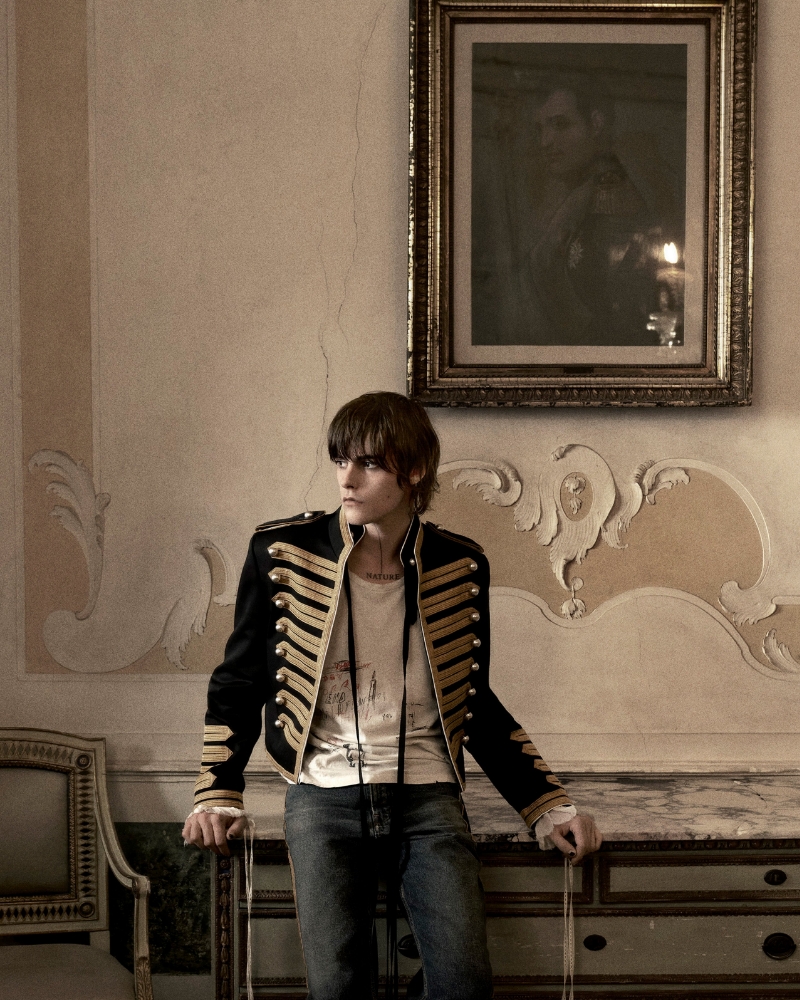
This campaign communicates Gothic romanticism through established luxury codes. Palatial interiors, military tailoring, and historical silhouettes carry the meaning before the garments do. The brand's darker poetry gets filtered through ornate architecture and heritage costume references.
You recognise luxury authority before you experience Demeulemeester's specific vision. The Gothic becomes decorative rather than disruptive.
The conventions
01 Aristocratic interiors as cultural legitimacy. Ornate neoclassical rooms, faded ornamentation, and classical grounds position the brand within established taste hierarchies. This borrows authority from architectural heritage rather than constructing owned meaning.
02 Military tailoring as timeless luxury. Military jackets, structured shoulders, and elongated silhouettes signal permanence over seasonal relevance. The clothes read as beautiful anachronisms rather than contemporary design language.
03 Atmospheric mood photography as luxury standard. Soft focus, film grain, and melancholic tone create sustained emotional register over product clarity. This follows category default for poetic luxury communication.
04 Controlled theatricality as luxury safety. The gothic references are highly controlled; never chaotic, never grotesque, never truly unstable. The darkness is curated into elegance rather than allowed to become discomfort. This makes experimentation commercially safe.
05 Grainy monochrome and desaturated colour as authenticity markers. Grainy black-and-white frames and softly desaturated colour images distinguish the imagery from polished digital fashion photography. This has become standard luxury authentication rather than artistic choice.
The reading
The Gothic romanticism gets domesticated by luxury presentation systems. Palatial interiors contain the darkness. Historical tailoring makes rebellion archival rather than contemporary. The brand's subversive edge becomes acceptable luxury decoration.
Recognition flows through established luxury channels before reaching Demeulemeester's specific poetry. The infrastructure protects the product but limits its force.