Open the feed of someone who does what you do. Scroll for ten seconds. Now open a rival's. Scroll again.
Same light, same framing, same mood. Not identical. Close enough that standing out is the exception, not the rule.
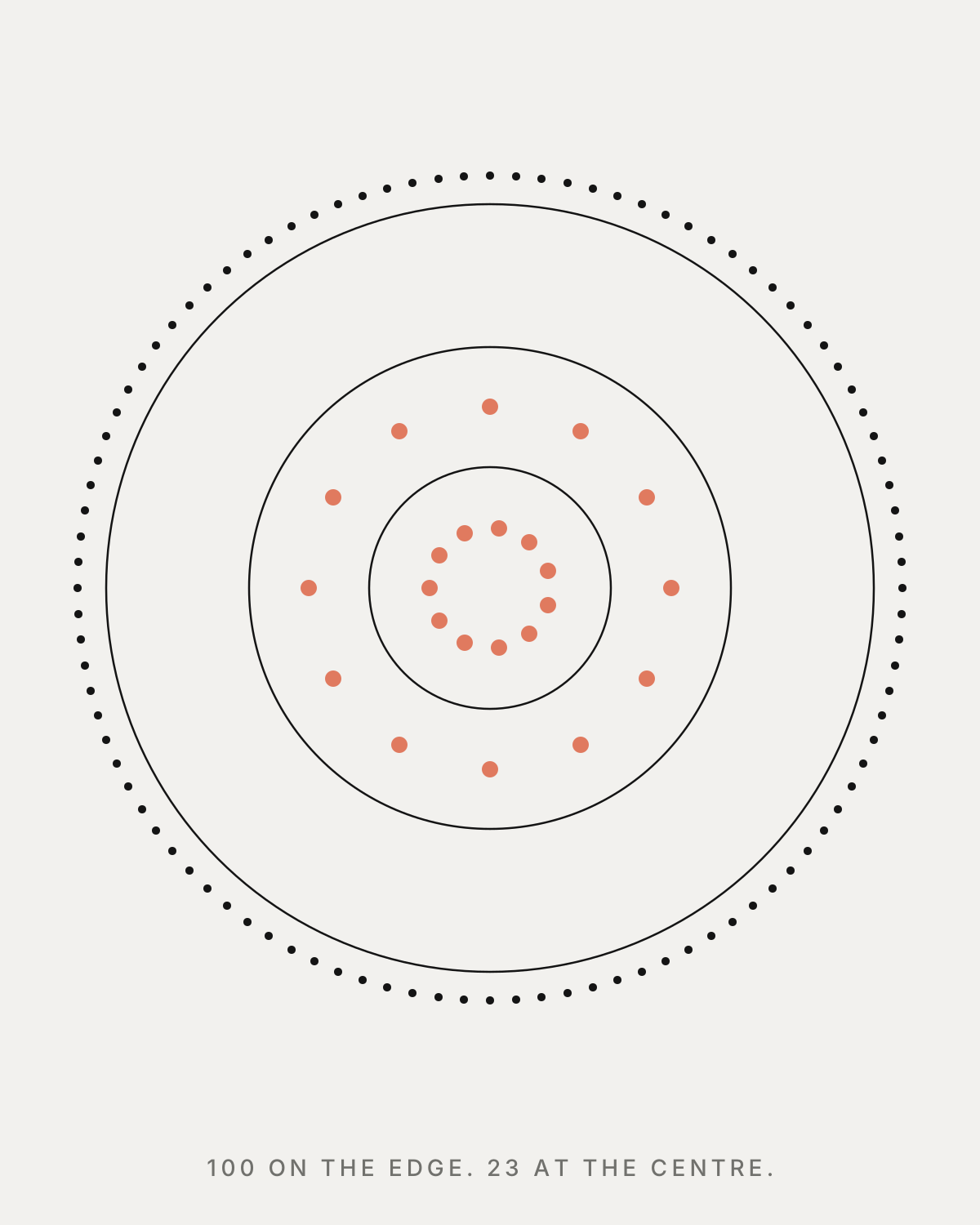
Ten photographers. Ten studios. Ten feeds. The gap between them keeps narrowing until you could shuffle the work and lose nothing.
This is not a quality problem. The photographers are brilliant. The art direction is thoughtful. The images are handsome. And most of it is completely, precisely invisible.
The problem is convention. Not quality. Convention.
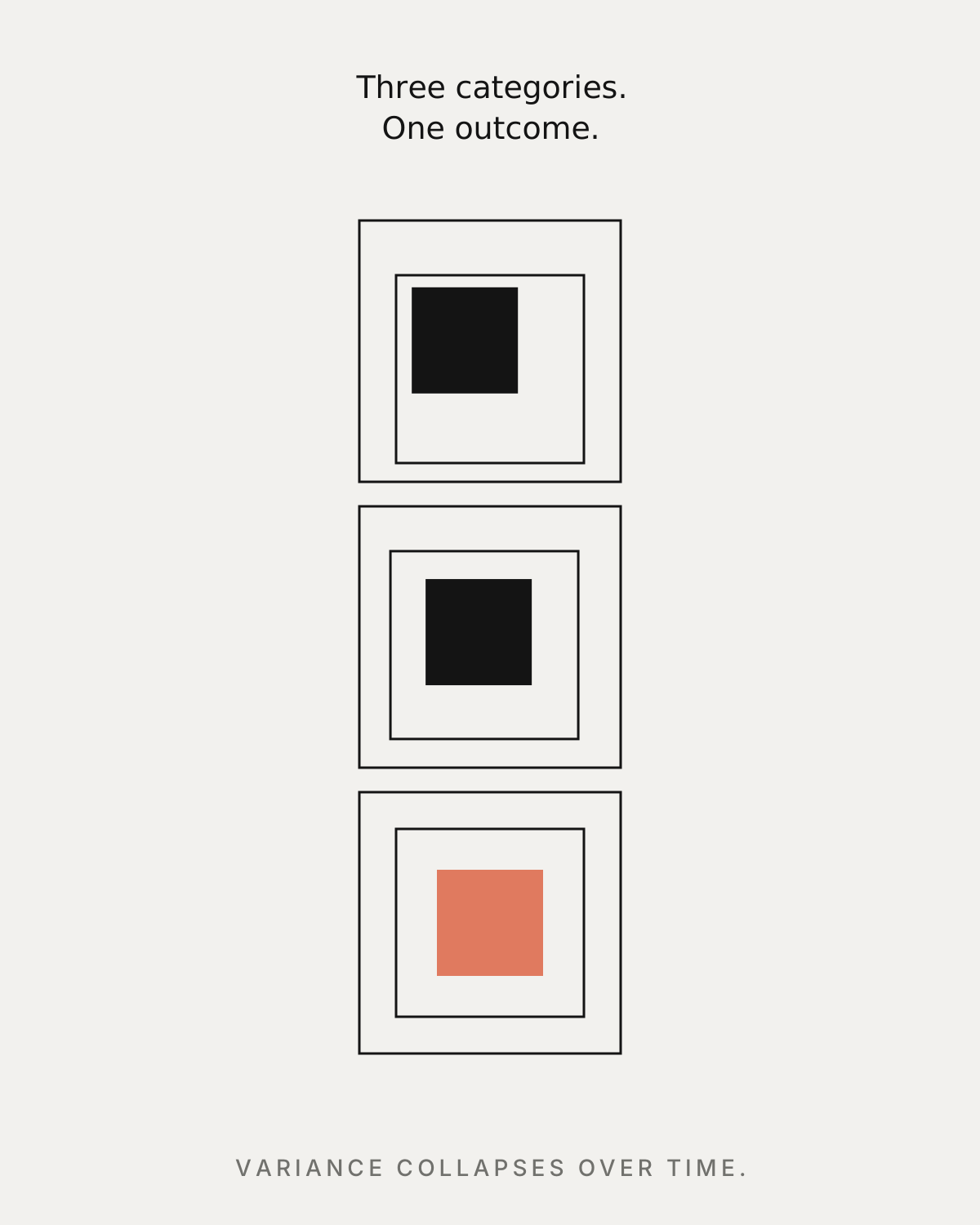
A convention is a repeated creative decision that signals you belong: the lighting, the casting, the composition, the colour, the framing. Each one is reasonable on its own. Together they produce convergence. Shared references, shared talent, shared tools, a shared instinct for what is safe. Different names, same output.
And a convention is not a small thing. W. David Marx calls conventions the atomic unit of culture: the small, arbitrary choices a group agrees to follow, then forgets it ever chose. Customs, styles, trends, all of it. So when I name the conventions in your work, I am naming what culture is actually made of.
And when everyone follows the same ones, they stop working. A convention was meant to say this is good. Now it only says this exists. Which is to say, nothing.
And it is worse than your own work. When everyone leans on the same conventions, nothing new gets in, and culture stops moving. Everything ends up looking like everything else. Which is the feed you just scrolled.
There is a quieter cost, and it is the worst one. Sameness does not just bore the people looking at the work. It kills the nerve of the people making it. When the safe, converged version is the one that gets praised, hired and shared, reaching for anything stranger starts to feel like a risk not worth taking. So the reaching stops. That is how sameness kills creativity. Not by banning the new thing, but by making it look like a mistake.
Five brands. One visual language. Whose?
Forecasting makes it worse
There is a whole industry built to solve this, and it does the opposite. I know, because I worked in it for twenty years.
Trend forecasting sells everyone the same picture of what is coming next. The same colours, the same moods, the same references, to every brand and every studio at once. So everyone sets off toward the same point on the horizon, together, and calls it being ahead.
It does not predict the future. It coordinates it.
The forecast is a convergence machine with a subscription fee, and the sameness it warns you about is the sameness it just sold you.
Why it bites now
For years, the effort hid the sameness. When work was slow and expensive, the fact that most of it was interchangeable stayed buried under the cost of making it. Then AI arrived. The machine is not worse than a good maker. It is as good as the average maker, instantly and for nothing. And the average maker was always swappable. AI did not cause the sameness. It exposed it.
So here is the turn, and the whole practice rests on it. The thing that makes your work distinct and the thing that now protects it are the same thing: the part that could only have come from you. This was always true. AI has only made it unavoidable. That part has a name. Imperfection.
It is not a look
People hear imperfection and picture rougher work. A grain filter. Something lo-fi, raw, handmade. That is not it.
Imperfection is not a texture you add. It is a deviation you choose. A departure from the smooth, converged mean, made on purpose, out of your own material. You do not rough the work up. You take it somewhere only you would take it.
This is also how culture moves at all. It changes when someone sets a new convention against the settled ones. Sameness is culture stalling. Deviation with intent is culture moving. Make the thing only you would make, and you have not just stepped out of the average, you have added something that was not there before.
There is a discipline to doing that well, and it is the method underneath everything I publish here. See. Deviate. Hold. See the conventions you are sitting in. Deviate from the ones costing you distinctiveness, by the exit that is yours. Hold it, when everything pulls you back toward the middle.
The contrast is the mechanism
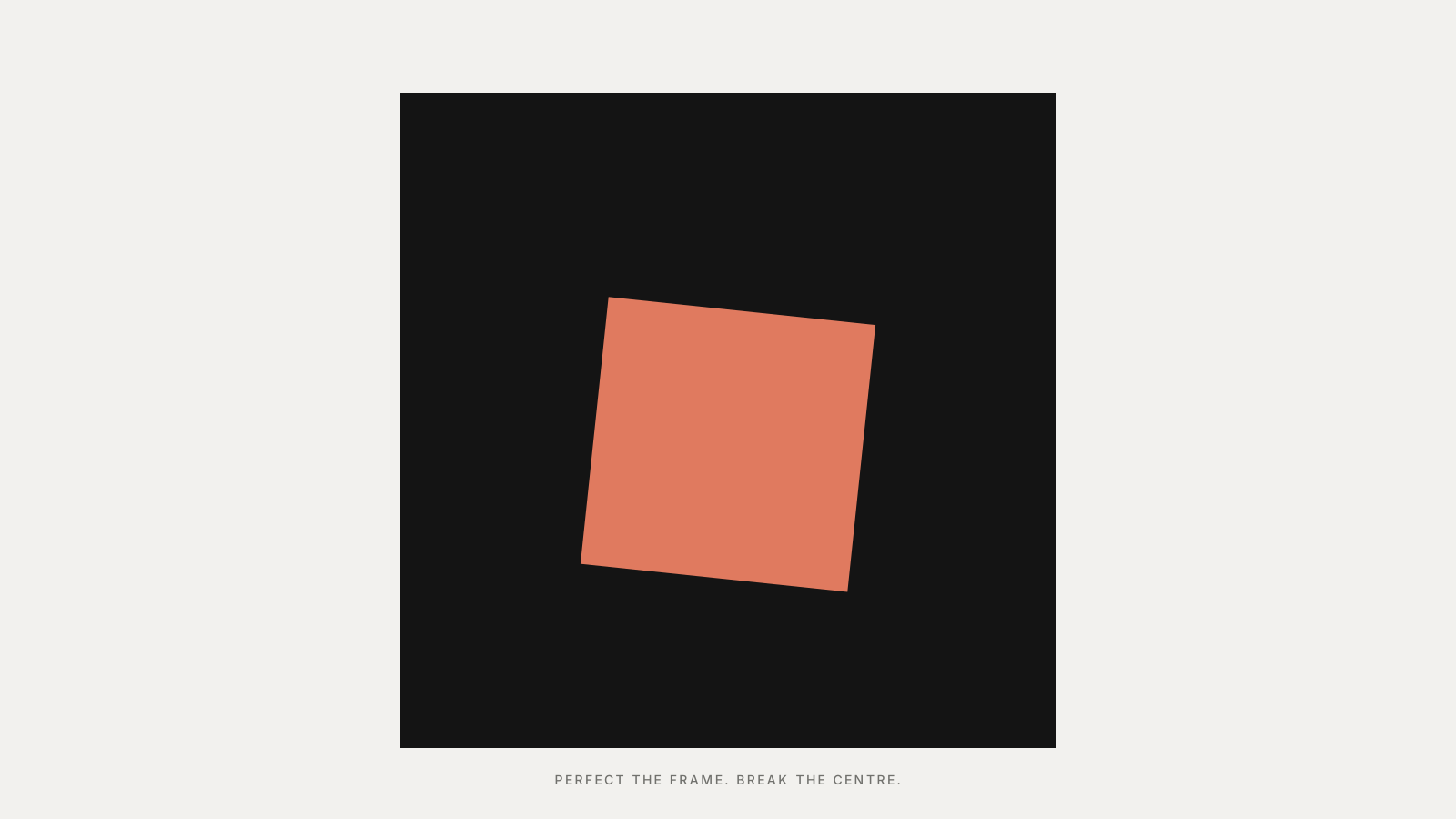
You do not deviate on everything. You deviate on a few things, and keep the rest exact. That contrast is the mechanism. The precision is what makes the deviation read as a point of view, not a mistake. Deviate on everything and it just looks like you cannot do the work.
Yohji Yamamoto could construct a perfect garment. He chose the frayed edge instead. But the frayed edge only works because everything around it is flawless. Against that precision, the deviation becomes a philosophy.
One thing departed. Everything else exact. The deviation reads as intent.
The question is not whether your work is good. It is whether it is unmistakably yours. Take your most recent piece. Strip your name off it. No caption, no handle, no credit. Drop it into a feed beside twenty others from your field. Would anyone pick it out as yours? If not, the problem is not quality. It is convention. And convention is a choice, the moment you can see it.